Cerebral palsy looks different in every child. Some children walk with a little support, others use a wheelchair, and some also need help with eating, breathing or seizures. For families caring for children with cerebral palsy in Hollywood, FL, a PPEC brings nursing and therapy together in one place during the day.
What cerebral palsy is
Cerebral palsy (CP) is a group of conditions that affect movement, muscle tone and posture. It is caused by differences in how the brain develops, or by an injury to the brain, before birth, during birth or in early childhood. According to the CDC, it is the most common motor disability in childhood.
CP does not get worse over time, but a child's needs change as they grow. Doctors often describe it by how it affects movement:
- Spastic CP. Stiff or tight muscles. This is the most common type.
- Dyskinetic CP. Movements that are hard to control, such as slow writhing or sudden jerks.
- Ataxic CP. Trouble with balance and coordination.
- Mixed CP. Signs of more than one type.
Care children with CP often need
Many children with cerebral palsy have other health needs along with movement differences. Not every child has all of them, but these are common:
- Seizures that need monitoring or rescue medication
- Feeding and swallowing difficulties, sometimes with a G-tube
- Breathing support, especially for children with weak airway muscles
- Medications for muscle tone, seizures or reflux given during the day
- Positioning and equipment such as braces, standers, gait trainers and wheelchairs
- Support with communication
When these needs call for a nurse during the day, a PPEC can care for your child while they keep up with therapy, learning and play.
How therapy helps
Most children with cerebral palsy have regular therapy, often several times a week. At Peek A Boo, therapies happen on site, so children do not lose time traveling between clinics.
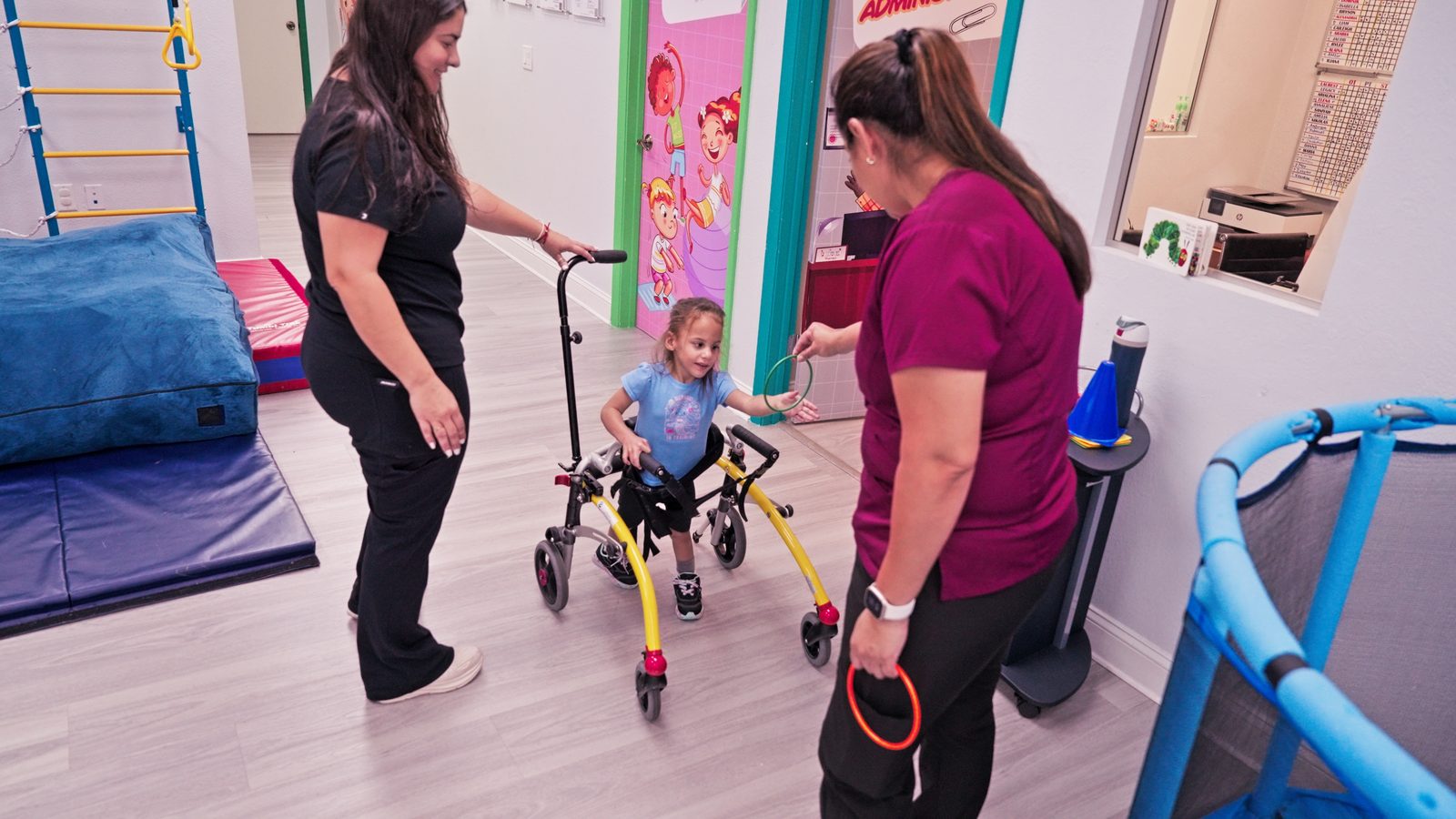
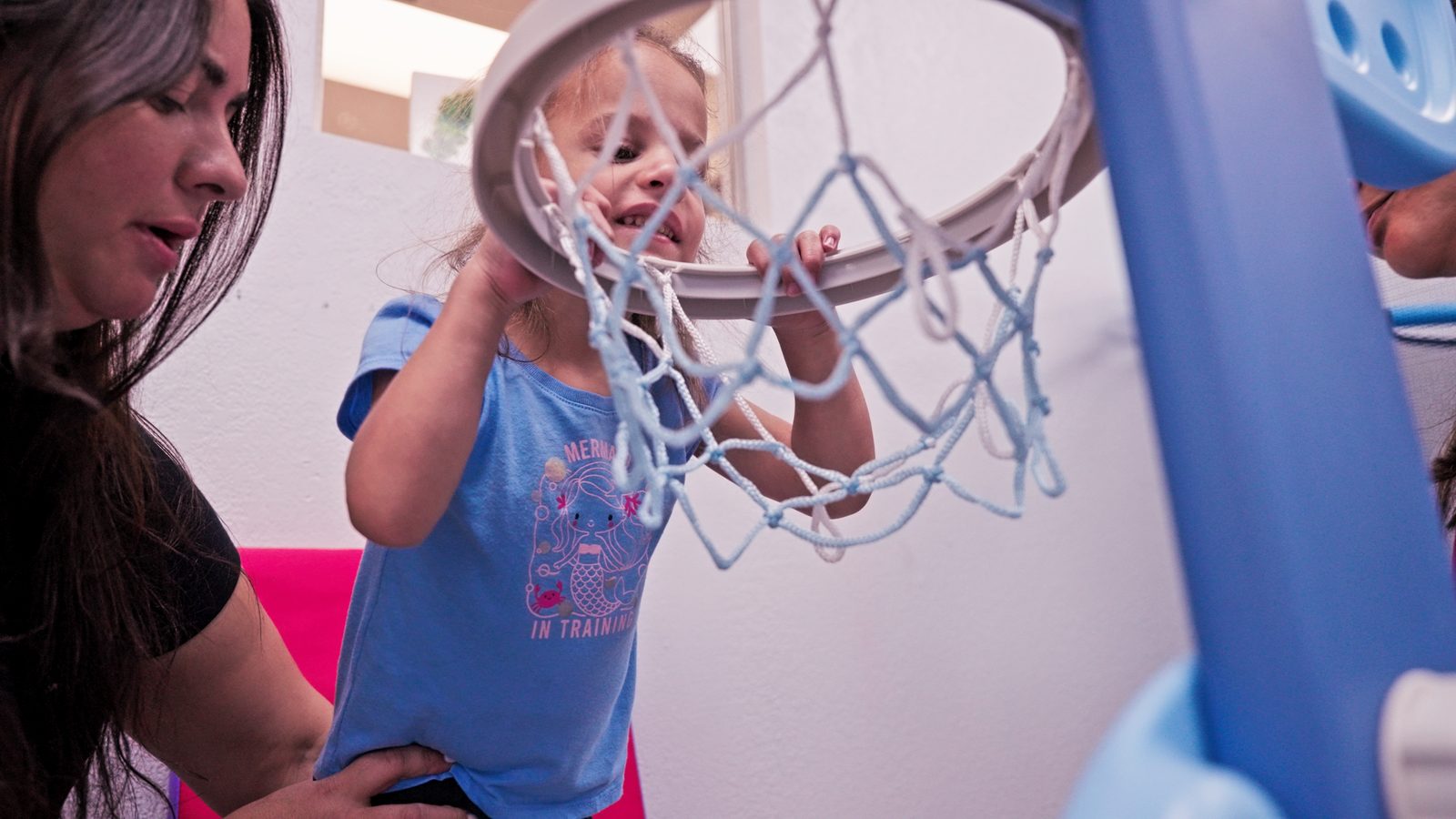
- Physical therapy builds strength, balance and mobility, from sitting and standing to walking with a gait trainer or walker. It also helps with stretching tight muscles.
- Occupational therapy works on hand skills, self-care and positioning, so children can do more for themselves.
- Speech therapy supports communication, whether through words, pictures or a device, and helps with safe chewing and swallowing.
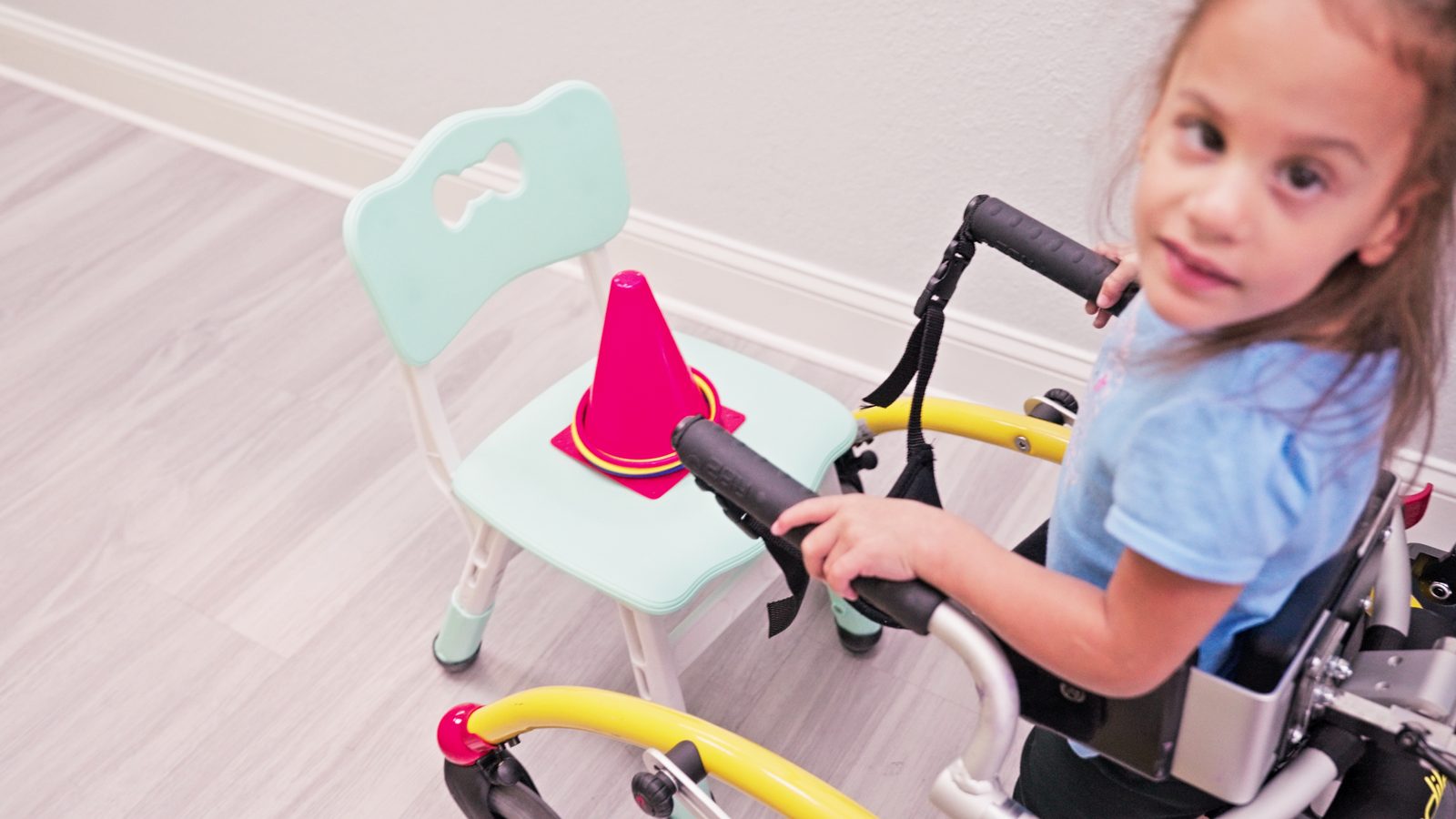
Because therapists and nurses work in the same building, a stretch or a seating position learned in therapy carries through the rest of the day. Read more about each therapy in our guide to pediatric therapy at a PPEC.
Nursing care during the day
Licensed nurses are on site all day at our Hollywood center. For children with cerebral palsy, that may include:
- Giving medications on schedule
- Watching for seizures and following the child's seizure plan
- Managing G-tube feeds and safe feeding positions
- Airway care, suctioning and oxygen when needed
- Repositioning and skin checks for children who spend much of the day seated or lying down
Nurses also keep you updated at pickup and coordinate with your child's doctors. A physician is on call for the care team. For a full schedule, read what a day at a PPEC looks like.
Does my child qualify?
Cerebral palsy is one of the conditions we care for, and children from birth up to age 21 may qualify. Enrollment is based on three things:
- Florida Medicaid or a Medicaid managed-care plan
- A physician's referral, usually a 180-day prescription that is renewed as care continues
- A medical need for skilled nursing during the day
For eligible children, PPEC is covered in full, including free door-to-door transportation. Our who qualifies page explains each requirement, and our team will check your child's eligibility for you. We speak English, Spanish and Creole.
Frequently asked questions
Can a child with cerebral palsy attend a PPEC?
What therapies help children with cerebral palsy?
Is PPEC for cerebral palsy covered by Medicaid?
What ages do you serve?
Can my child bring their own equipment?
Caring for a child with cerebral palsy?
Book a visit to see our therapy gym and meet our nurses. We will check eligibility for free.