
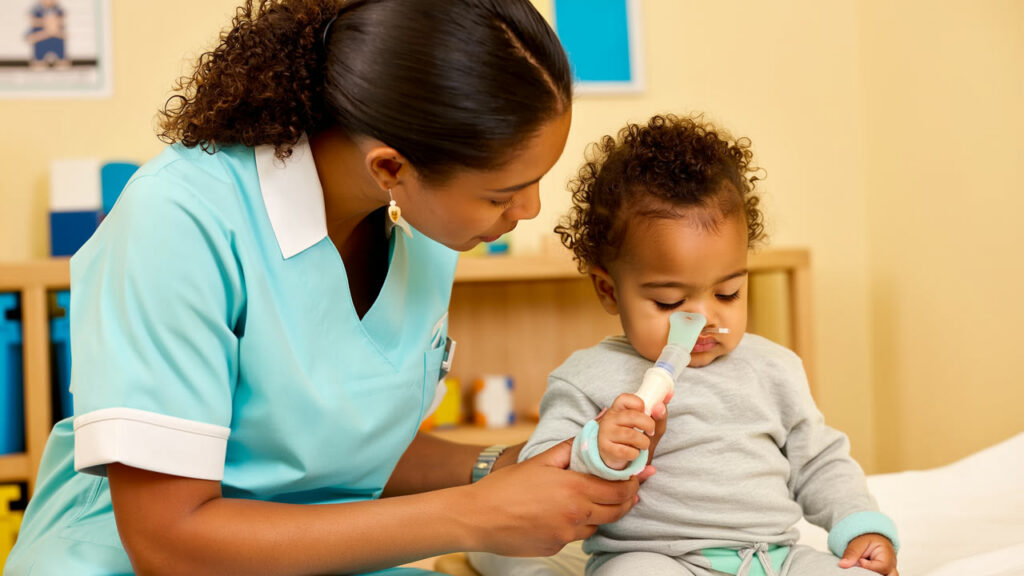
If you're weighing PPEC vs private duty nursing, you're not choosing between good care and bad care — you're choosing between two very different days for your child. One brings a licensed nurse into your living room. The other brings your child to a center built around nurses, therapists, and other kids. Both are covered by Florida Medicaid at no cost to eligible families, which is exactly why so many Broward County parents get stuck on this decision. Here's an honest breakdown — including the situations where a PPEC like ours is not the right answer.
PPEC vs private duty nursing: what each one actually is
PPEC stands for Prescribed Pediatric Extended Care. It's a medical daycare licensed and regulated by Florida's Agency for Health Care Administration (AHCA), where children from birth through age 20 receive skilled nursing care for up to 12 hours a day — trach and ventilator management, G-tube and NG-tube feedings, seizure protocols, medication administration — alongside therapies, learning, and honest-to-goodness play. If the model is new to you, our guide to what a PPEC is and how it works walks through a full day in detail.
Private duty nursing (PDN) sends one licensed nurse — an RN or LPN — to your home for a prescribed number of hours. Your child stays in their own environment and gets true one-on-one attention. The skilled care itself is the same kind of care; the difference is that it happens in your living room instead of a nursing center.
Here's the overlap that trips families up: both are Florida Medicaid benefits, both require a physician's prescription plus prior authorization from your child's Medicaid or managed care plan, and both cost eligible families $0. Since money doesn't break the tie, the PPEC vs private duty nursing decision comes down to what kind of day serves your child — and your family — best.
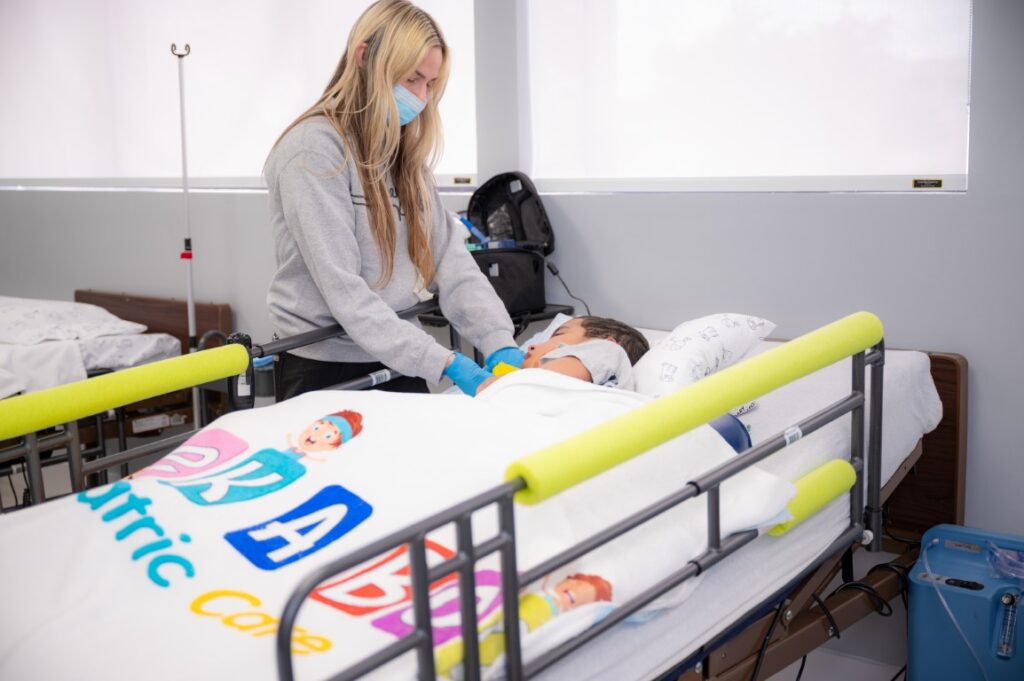
PPEC vs private duty nursing side by side
Most parents we meet in Hollywood, Davie, and Pembroke Pines have heard of one option but not the other — hospital discharge planners often mention whichever they know best. Here's how the two actually compare, line by line.
| What matters | PPEC (center-based) | Private duty nursing (home-based) |
|---|---|---|
| Setting | AHCA-licensed pediatric center — at Peek A Boo, that's our Hollywood facility | Your own home |
| Care team | A team of pediatric nurses plus on-site therapists, with a physician on call | One nurse per shift |
| Skilled nursing | Trach/vent care, tube feedings, seizure protocols, meds — all day | The same skilled tasks, delivered one-on-one |
| Therapies | Physical, speech, occupational, and respiratory therapy plus ABA under one roof | Arranged separately through home health or outside clinics |
| Social time | Other children, art, music, educational and recreational activities every day | Mostly family and visitors |
| If a nurse calls out | The center is staffed by a team — your child's day goes on | The shift may go uncovered, and a parent often has to step in |
| Transportation | Door-to-door pickup and drop-off is a covered PPEC benefit in Florida | Not needed — the nurse comes to you |
| Hours | Daytime care, up to 12 hours per day | As prescribed — can include evenings, nights, and weekends |
| Cost with Florida Medicaid | $0 for eligible children | $0 for eligible children |
Notice what the last row does to this comparison: with cost identical, you're free to choose on fit alone. Both routes run through the same Medicaid paperwork, too — our Florida Medicaid PPEC eligibility guide covers the prescription and prior-authorization steps in plain English.
Important: Neither option is "more covered" than the other. Both are authorized based on your child's documented medical need and physician's prescription — never on what a family can afford to pay.
When private duty nursing is the better fit
We run a PPEC, and we'll still tell you plainly: sometimes PDN is the right call. Parents can smell a one-sided sales pitch, and your child's care plan deserves better than one. Home nursing tends to win when:
- Your child needs overnight or weekend coverage. PPEC is a daytime program. If the hardest hours at your house are 10 p.m. to 6 a.m. — overnight vent monitoring, night feeds, round-the-clock seizure watch — those hours belong to PDN.
- Your child is medically unstable right now. Fresh out of surgery, in the middle of frequent medication changes, or newly home with equipment the family is still learning — some children need a season of one-on-one care at home before a center makes sense.
- Your doctor has ordered strict infection precautions. For some immunocompromised children, limiting exposure to other kids is part of the treatment plan. Follow that guidance — a group setting can wait.
- Home is genuinely where the care plan lives. A few care plans are built around the home environment, and a good PPEC will respect that instead of arguing with it.
If your child's physician recommends home nursing for this season, take it. Prescriptions are typically written for 180 days at a time, so nothing about today's choice is permanent — many of our families started with PDN and moved to us when their child stabilized.
When PPEC wins: therapies, friends, and a day you can count on
For medically complex children who are stable enough to leave the house, a PPEC solves problems a single nurse at home simply can't. This is where the PPEC vs private duty nursing question usually settles itself.
- Every therapy under one roof. At Peek A Boo, physical therapy, speech therapy, occupational therapy, respiratory therapy, and ABA all happen on site — no driving between clinics, no waitlists stacked on waitlists. The therapists and nurses see your child daily and talk to each other, so progress in one area feeds the others.
- Real social development. Medically complex kids need friends, music, art, and circle time just as much as any child. A home nurse can't provide a room full of peers; our days are built around them.
- No more staffing roulette. When a home nurse calls out, a parent misses work. A center staffed by a team of nurses doesn't cancel your child's day — which is why so many parents tell us PPEC is what finally let them keep a full-time job.
- Up to 12 hours of covered care, plus the ride. Door-to-door transportation is a covered PPEC benefit in Florida, and our team also provides parent and caregiver education, so the skills we use all day come home with your child.
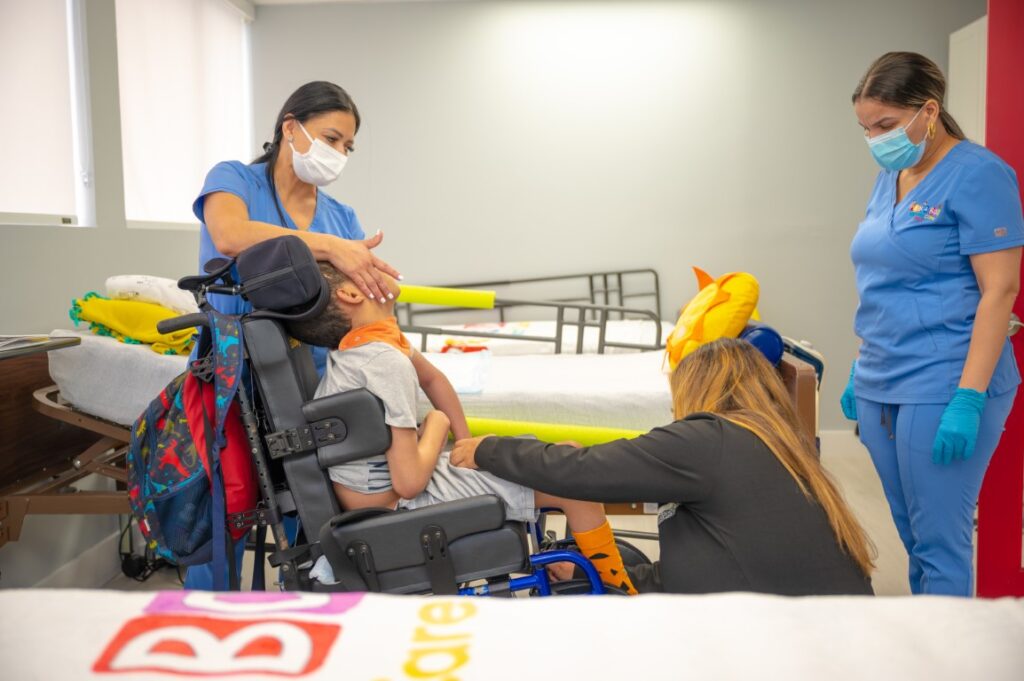
PPEC serves children from birth through age 20 with conditions like trach and ventilator dependence, feeding tubes, seizure disorders, cerebral palsy, cardiac conditions, and complications of prematurity. If that sounds like your child, our who qualifies page breaks down the criteria.
Using PPEC and private duty nursing together in Broward County
Here's the part surprisingly few families are told: this doesn't have to be an either/or decision. Florida Medicaid allows PPEC and PDN to be combined, and plenty of Broward County families do exactly that — a full day at Peek A Boo while parents work, then PDN hours covering the evening or overnight stretch at home.
For a ventilator-dependent child, for example, that can mean nurses, respiratory therapy, and playtime at the center during the day, with a home nurse handling overnight monitoring. The two prescriptions cover different hours, written by your child's physician and authorized by your Medicaid plan, and our team helps with the paperwork on the PPEC side.
Tip for your tour: If your child already has PDN hours, bring the current authorization with you. It helps us talk through how a combined schedule could actually look for your family — before you change anything.
How to get started at Peek A Boo PPEC in Hollywood
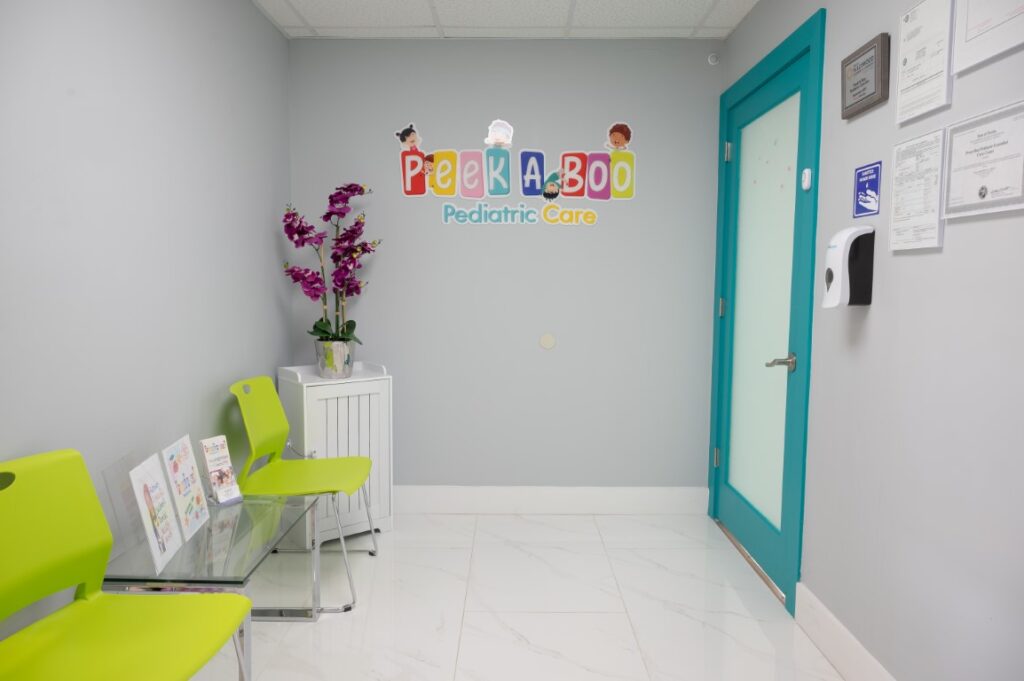
Peek A Boo Pediatric Care sits at 7777 Davie Road Extension, Suite #100A in Hollywood — right on the Hollywood, Davie, and Pembroke Pines border, serving families across Broward County and North Miami-Dade. Our staff is bilingual in English and Spanish, and we're familiar faces to families discharging from the Memorial Regional and Joe DiMaggio Children's Hospital corridor.
- Reach out. Call (954) 932-3600 or send the contact form — a real person follows up, in English or Spanish.
- Verify Medicaid. We check your child's Medicaid or managed care plan with you, so there are no surprises.
- Get the prescription. PPEC requires a physician's referral, typically written for 180 days. We coordinate with your pediatrician or specialist.
- Prior authorization. Our team helps prepare and submit the paperwork to your child's plan.
- Tour the center. Meet the nurses, see the therapy rooms, and bring every question you have — including "would PDN be better for us?" We'll answer it honestly.
Frequently asked questions
Can my child receive PPEC and private duty nursing at the same time?
Do PPEC and private duty nursing really cost families $0?
Which is better for a baby just coming home from the NICU?
Do I need a doctor's prescription for PPEC?
Can a PPEC really handle a trach, ventilator, G-tube, or seizure disorder?
Come see the difference a day makes
The easiest way to settle PPEC vs private duty nursing is to walk through our Hollywood center, meet the nurses and therapists, and picture your child's day here. Tours are free, hard questions are welcome, and our team handles the Medicaid paperwork with you from day one.